Welcome to the Elstree & Borehamwood Museum blog.
This blog is about all those happenings inside and outside the Museum that have caught our attention.
From events and exhibitions, to new discoveries in the collections, to news and views.
Any comments and items to go here please contact Simon on info@elstree-museum.org.uk
Whilst the Museum is closed and our collections unable to be seen by visitors, we have created a weekly virtual museum with an Object of the Week feature from our collections.
Object E : Elstree Pubs
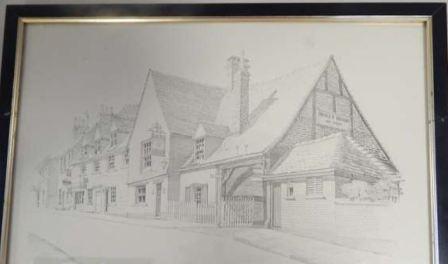
The Museum received a set of framed sketches of Elstree Pubs as a donation, which included Artichoke, Red Lion, Holly Bush and Plough. It is the Hollybush we have chosen as our object of the week.
Elstree Hill at one time was a busy coaching stop on Watling Street. The Hollybush was the last survivor and the oldest of all the pubs in Elstree village. It was extended in the 1980s when the coaching arch was removed and the outside toilets moved to the rear of the pub. Since the building was constructed in around 1450, the road level has risen, causing customers to step down into the bar. Many of the original beams exist, including those supposedly coming from Newgate Prison, and the original inglenook fireplace.
The first mention of it as an Inn was in 1786 when it was owned by Thomas Clutterbuck and managed by John Green. The Inn featured in an episode of Most Haunted in recent times.
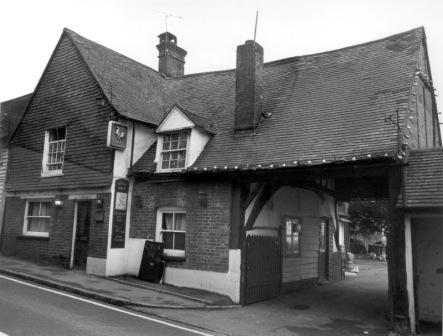
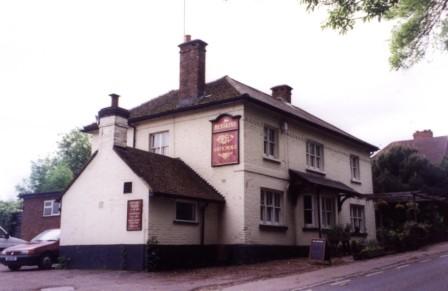
It closed in 2009, along with The Artichoke further down the hill. Both inns were said to have great views of the surrounding countryside. The Artichoke, a short distance from the junction with Allum Lane, is first mentioned in 1750 when it was kept by Philip Cogdell. It was here that a number of inquests took place including that of William Weare who was murdered in 1823.The Birmingham to London stagecoach stopped here twice daily in the 1830s. It too has recently ceased to be a pub and is now the area’s first Shtiebl - a Jewish education and community centre.
Please see the video here for more details
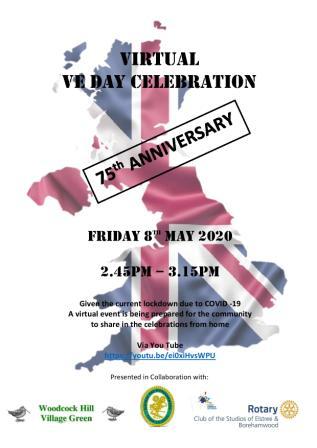
Lest we Forget
In line with government guidelines, Studios Rotary Club are pleased to announce that they will run a virtual Celebration on Friday May 8th .
· 2.45pm Town Mayor, Cllr Simon Rubner, Cllr.Morris Bright Leader of Hertsmere Borough Council, will give a message to Town residents: Anthony Wass, Royal British Legion Exhortation, Studios Rotary Club President Nick Male will introduce the rest of the programme;
· 2.55pm Andrew Grady will play “The Last Post” on his cornet from his back garden. He will join 1000 players across the Nation;
· 3.00 pm George MacGregor will play on his bagpipes ‘The Battles Over’ also, from his back garden. This was a piece specially commissioned for 2018 celebrating the end of WW1. A specially commissioned piece of music.’VE75’. will be played by a1000 pipers across the nation;
· The Nation will be invited to ring out the Bells of Peace;
Whilst the Museum is closed and our collections unable to be seen by visitors, we have created a weekly virtual museum with an Object of the Week feature from our collections.
Object D : Dead Man’s Penny
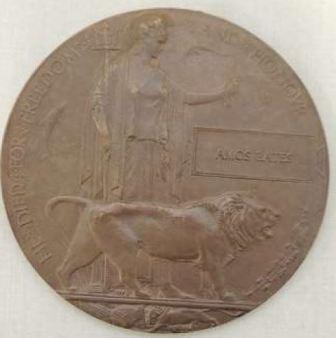
The Museum has two of these items in its collection. The Dead Man’s Penny is a bronze plaque of condolence which was issued after the First World War to the next of kin of British and Empire service personnel who were killed as a result of the War. This memorial was commissioned by the War Government who recognised the need to both honour the fallen and also show gratitude to their next of kin and 1,355,000 were issued.
The name Dead Man’s Penny was given because of the similarity in appearance to the much smaller penny coin. Issue continued into the 1930s to ensure all who died as a consequence of the War were commemorated.
This particular Dead Man’s Penny is in honour of local man, Amos Bates.
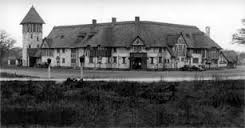
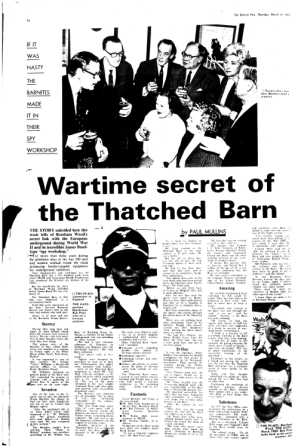
There are many stories about The Thatched Barn : famous frolicking actors before the War, fire destroying the thatch after the War, but the best stories come from its secret work for the SOE during the War. Over 200 local film craftspeople well versed in deceiving the camera with prosthetics, wigs, makeup, and props that looked like one thing but were really another, worked on equipping our secret agents. From exploding cigarettes, lumps of coal and rats, to radio suitcases with false bottoms, from fake German money and Nazi documents to a one man submarine tested in the Barn’s swimming pool. The full story is here on the second page of our May 2017 Newsletter.
Here’s one local gentleman’s story about the Barn : “… mention was made of wartime experiences at The Thatched Barn. I was told about this when having my haircut by Mr Battle, the barber operating from Theobald Street, near Tompkins, the butchers and later at the top of Theobald Street, opposite the Crown. It was about 1962 when he told me that during WW2 he had to sign the Official Secrets Act and told to report to the Thatched Barn. When he arrived, the chap on the gate let him in and directed him to a door on which he knocked. Imagine his surprise when the door was opened by a soldier dressed in a German uniform. Mr Battle told me that he went there many times to cut hair in a German fashion for agents that were going to be sent to Germany and during his many visits, he heard only German spoken.” David Clark
If you have a story – please post it on our Facebook page!
Intro – Whilst the Museum is closed and our collections unable to be seen by visitors, we have created a weekly virtual museum with an Object of the Week feature from our collections.
Object C : Canterbury House
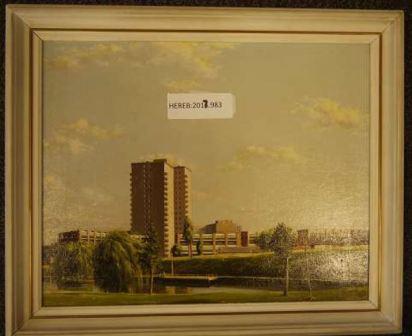
This is a painting of Canterbury House from Brook Road, overlooking the lake. The painting was donated to the Museum by Bushey Museum and Art Gallery.
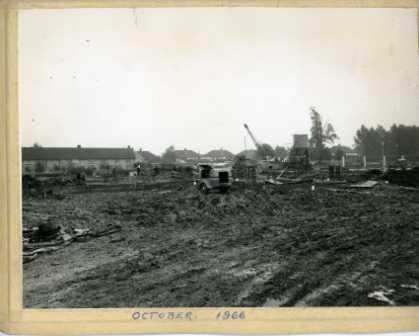
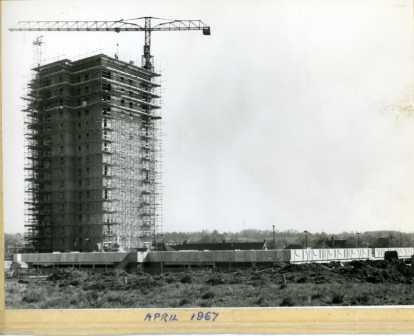
Building work on this distinctive block of flats in Stratfield Road began in October 1966. At 18 floors and 55 metres high, it is the tallest building in Borehamwood.
The block was refurbished between 2004-2006 and a commemorative plaque was erected acknowledging the building as the location site of some scenes from A Clockwork Orange; the controversial Stanley Kubrick film of 1971.
In the film, one of the flats at the top of Canterbury House was used as the interior of character Alex’s apartment. The fictional address was Municipal Flat, Block 18A, Linear North. The couple who lived in the flat were temporarily moved out and £5k was spent on redecoration for the scenes. When filming was over and the couple re-instated in their own home, Kubrick moved them out again to re-shoot a couple of close-ups!
As an aside, the set of the Korova Milk Bar was constructed in a disused factory which stood where the current Shell Petrol Station is now on the corner of Bullhead Rd.
This is not the only accolade for Canterbury House; the block has also featured in On The Buses and in EastEnders where it was home to the Beale Family, including the young Ian Beale. And has been seen over the closing credits of many a Holby City which is filmed nearby.
Bit fed up with all this? Then have a bit of History to get you through the day with a couple of suggestions from our Volunteers :
Matt says check out the Herts At War website here and the associated videos on YouTube here.
"The Herts at War Project looks at the history of Hertfordshire in the First World War. It aims to commemorate those who fought, died and survived. It also aims to give perspective to the war, and to inform more about the Home Front. Through doing so, the project interacts with the descendants of those who served, and educates the population of Hertfordshire, about the county’s role in the Great War."
And if you prefer to look underground try your hand at a free Archeology Course recommended by Helen here. It is free – ignore the pay screen!
Enjoy!
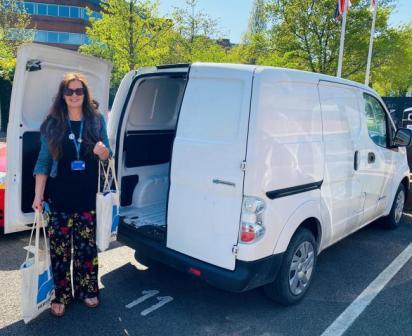
Our favourite Hertsmere person is looking after us and other vulnerable residents during the Museum lockdown.
From Saturday’s Borehamwood Times :
“Museums Officer Ruth Stratton is still providing what support she can to the borough's museums and assisting them with their online content. She said: ‘My day job involves working with the borough’s four volunteer-run museums. Many of the volunteers are elderly and live alone and need support during these difficult times.
‘For me, helping the vulnerable residents by offering to deliver their shopping and keeping in touch to make sure they are doing OK, is a small way to give something back to our residents.’ “
Our picture shows Ruth with the Museum Van.
Whilst the Museum is closed and our collections unable to be seen by visitors, we have created a weekly virtual museum with an Object of the Week feature from our collections.
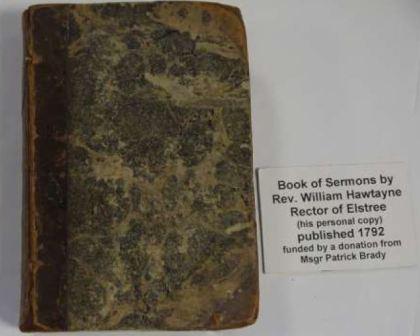
Object B: Book Of Sermons
This may look like an unremarkable book cover but it dates back to 1792 and is the personal copy belonging to Rev William Hawtayne, who was Rector of Elstree from 1778 until 1812. It is one of 8 volumes that has survived.
During his time as Rector, Rev Hawtayne would have presided over one of the more infamous burials of the period; that of Martha Ray who was murdered by her obsessive lover on 7th April 1779.
Martha Ray was born in Elstree in 1745 and by the age of sixteen she was an apprentice dressmaker in Clerkenwell. Martha possessed a fine singing voice, became an actress and opera singer, and entranced John Montague, the 4th Earl of Sandwich, who installed her as his mistress at his home. It is reported that she bore him 9 children. Martha met Captain James Hackman in 1775 and despite his frequent proposals of marriage, Martha would not leave the Earl. Hackman grew more and more obsessed about Martha and on the fateful night of 7th April, he followed her to Covent Garden where she had been watching a play at the theatre. As she was getting into her carriage, Hackman approached her and fired a pistol at her head, killing her instantly. His attempt to kill himself at the scene failed, and he was hanged at Tyburn on 19th April.
Martha’s body was returned to Elstree and buried in the clothes she died in on 14th April 1779, under the orders of Sandwich who was inconsolable. However, her remains appear to have been moved since the date of her interment. When Elstree church underwent repairs in 1824, her coffin was found in a vault in the centre of the chancel. A gravestone in the churchyard now marks her final resting place. A letter to The Times in 1928 revealed that it was the 9th Earl of Sandwich who replaced Martha’s crumbling tombstone with the one which stands there today.
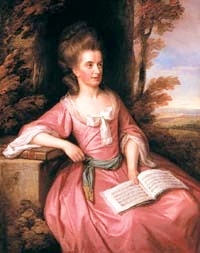
Martha Ray by Nathaniel Dance, 1777
Notable Historical Fact : Yes it was John Montague, the 4th Earl Of Sandwich, who 'invented' the sandwich.
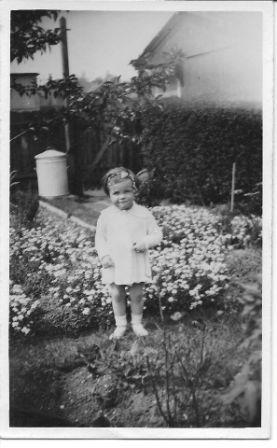
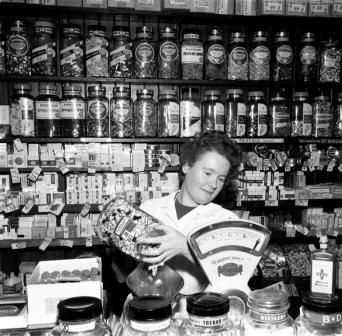
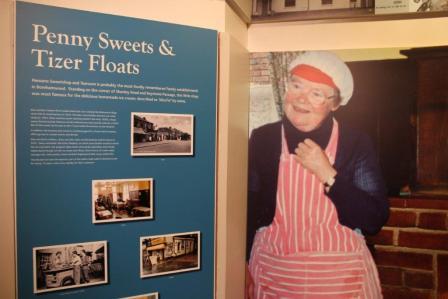
Mary was a founder member of the Borehamwood History Society, along with Alan and Ann Lawrence, and its first Chair. This became the Elstree & Borehamwood Museum where Mary became a valued volunteer, and gave her the opportunity for regaling of anyone who would listen to her historical reminiscences. Mary wrote a very informative booklet “The Birth of All Saints' Parish, Boreham Wood” which incorporated much historical information about the whole area and is available from the Museum website.
Mary is remembered by many local residents as the proprietor (along with her brother) of Hansons “sweet shop and tea room” located where Starbucks now is in Shenley Road. This was featured in the Museum Exhibition in 2017, Down The Shops. However Mary was tirelessly active in the community as a Rotarian and St. Albans Abby Guide in addition to her work in the Museum and attendances at All Saints Church.
Mary never married but was a great dog lover, taking her Labradors for regular walks over Woodcock Hill, a local cause of which she was a great supporter. Originally living over the shop, she moved to Tennison Avenue when the shop closed and spent her final years in the Radley Care Home.
Mary will be remembered with great affection and respect, and for a long time, by those of us who knew her. May she rest in peace.
This message has been received from Mary’s family:
“Mary was born 15th Feb 1933. She lived all her life in Borehamwood after Bert Hanson, her father, acquired the property at 73 Shenley Road (now Starbucks). Hansons including the tea room and confectioners/newsagent became Mary’s home with her mother and father. There was ample room above the shop for living and a good sized back garden for her dogs which were a source of great companionship for much of her life. She worked with John who, after National Service, also dedicated his entire working life to the business.
After Mary’s mother died she took on the role of looking after her father as well as working tirelessly in the kitchen making the famous pastry for the sausage rolls and pasties. She was also an active Guide at St Albans Abbey for many years.
Mary was an active Aunty for John’s Children (David, Kate and Mike) and took them on many trips to London and Stratford to museums during the holidays. She certainly encouraged a love of all things historical.
Moreover, Mary followed in Bert’s footsteps through Rotary becoming a Life Member and attending lunches and meetings. One of her serious passions was travel and for many years she would visit Rotary Friends in the US as well as explore historic sites around Europe and the Middle East. Mary knew a lot about many historic topics and was a huge source of knowledge for the community as well as her family. Indeed, much of her time after the business was sold 22 years ago, was spent volunteering with the Borehamwood History Society.
She would love to see her great nieces and nephews, Kon, Yiannis, Harriett, Gemma, Arthur and Alice and was keen to keep abreast of how they were doing in their young lives.
Her extended family will miss Mary very much. We’ve been touched by the notes on social media remembering Mary and the Hansons’ shop. These notes are a wonderful source of comfort to John and his family in these difficult times. Thank you to all who have taken the time to post.“
Mary Hanson : 15/2/1933 -11/4/2020

Intro – Whilst the Museum is closed and our collections unable to be seen by visitors, we have created a weekly virtual museum with an Object of the Week feature from our collections.
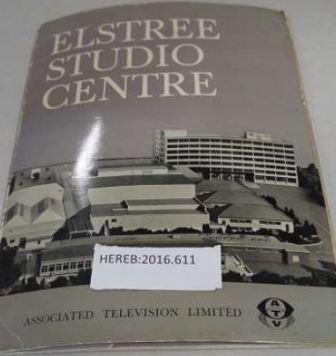
Object A: ATV Elstree Studios Centre Book, containing photos.
Associated Television Studios Elstree, opened in Borehamwood in April 1961 amidst strikes by staff, which took all live programmes off air on the opening night! Housed in the Museum Collection are some items relating to the strike, as collected by a local man. ATV stood on the site of Neptune Studios, which had opened in 1914.
From these studios came some of the best known ITV productions of the 1960s and 1970s, such as: Emergency Ward 10, Grange Hill, Sapphire and Steel, Celebrity Squares, Auf Wiedersehen Pet and The Muppet Show.
Studios A + B produced soaps, sitcoms, chat shows, schools, children’s programmes and religious shows. Studios C + D were responsible for big stage dramas and musicals, such as Cliff Richard and The Shadows. Market in Honey Lane launched in 1967 and was a market stall soap opera that ran for two years; filmed on the same site as EastEnders when the BBC took over the studios, almost 20 years later. Actor Anna Wing was in both series!
The Studios closed in 1981 but will always be known for the glory days when working in television provided a regular, secure job with a good pension.

Show only:
» Events
» Collections
» News
» Exhibitions
Elstree & Borehamwood Museum
96 Shenley Road
Borehamwood
Herts
WD6 1EB
Tel: 01442 454888


Admission: Free
Opening times:
Opening times:
Tuesday, Wednesday, Thursday
12pm - 6pm
Saturday 10am - 3pm
Registered Charity No.1157770


